The Licence You Didn't Search For: Putting a Towable Lift on a Public Street
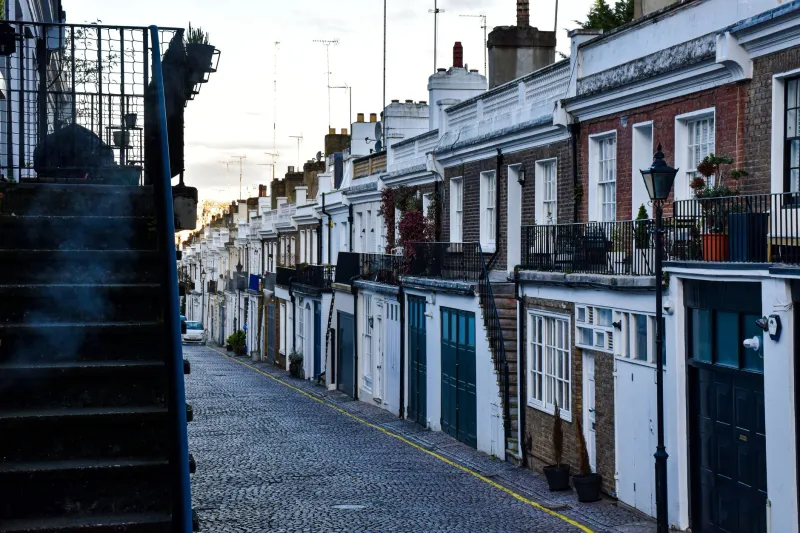
Towable lifts have a lot going for them. They go behind a Transit, they set up in minutes, and they'll happily reach a shopfront fascia, a sign bracket or a first-floor window without you paying for a 45-foot boom and an operator card. Then you read the job sheet properly and realise the machine isn't going in a yard. It's going on the pavement. Possibly the road as well. For a week.
That's where the hire gets interesting.
The licence you googled probably isn't the one you need
A lot of tradespeople search for a "pavement licence" and land on the Business and Planning Act 2020 regime — the fast-track permission councils brought in for pubs and cafés to put tables and chairs out during and after the pandemic. That's a real thing, it's genuinely quick, and it is almost certainly not what you need.
Putting plant, a towable MEWP, a skip or a bit of scaffolding on the highway is a different permission entirely. Most highway authorities will call it a plant licence, a scaffold and hoarding licence or a highway occupation licence, and it sits alongside — not instead of — whatever else the road needs.
So before you ring the hire desk, ring the council's highways team and ask a very plain question: "I want to stand a trailer-mounted access platform on the footway outside number 14 for six days, plus a small compound of cones. What do I need from you?" You'll get one of three answers: a licence, a permit under the New Roads and Street Works Act, or a polite no because it's a bus stop.
Get that answer in writing. Hire companies have started asking for it.
Parking suspensions: the bit with the lead time
If any part of the machine, the tow vehicle or the traffic management sits in a marked bay, you need a suspension. That's the council temporarily removing the bay from public use, and it costs money — often somewhere between £30 and £100 per bay per day depending on the borough, with a separate fee for the sign and the notice.
The trap is the notice period. Ten working days is common. In London, and on anything Transport for London manages as a red route, it can be considerably longer, and the answer can simply be no if the bay is a loading bay serving a business that kicks up a fuss.
Practical points most people learn the hard way:
- Suspensions don't cover the footway. A bay suspension lets you occupy the parking space. It says nothing about the pavement, the kerb or the crossing point.
- Bays are not your markers. The bay might be six metres. Your trailer might be five metres with the drawbar, before the tow vehicle has gone anywhere.
- The cones need their own thought. A Chapter 8 taper, signage and a pedestrian route around the works are separate from the suspension and often separate from the licence.
- Weekends and bank holidays count. Suspensions are usually charged per calendar day, not per working day, and a Friday-to-Monday job can bill as four.
The footprint that matters has the jacks down
Here's the number people get wrong on the form. A towable boom might be 1.5 metres wide and 5 metres long on the road, which sounds manageable in a bay. But with the outriggers set — and they have to be set — the stabiliser spread can be 3.5 to 4 metres across, and the jacks land forward and aft of the wheels.
On a street job that spread has to land on something real. Not a cellar hatch. Not a drainage gully cover. Not a paving slab over a void where the Victorian brick vault has given up. Not the lip of a kerb with a camber running away from you.
Walk the spot with a tape before you order the machine. If the outrigger wants to sit on the footway and the footway is 1.2 metres wide, you're not putting a lift there — you're putting it in the road and closing the lane, and that's a different conversation with a different price tag.
Also worth flagging: towable lifts are light, but the point load under a jack pad is not. Spreader pads are cheap. Buying back a cracked pavement light is not.
Towing it there is the easy part
Most trailer-mounted platforms sit in the 1,500–2,500kg bracket once you've got the machine and the trailer together, which puts them firmly in braked-trailer territory. That means a breakaway cable, a plated maximum authorised mass, and a tow vehicle whose gross train weight actually covers the combination.
Since the licensing rules changed, a standard category B licence covers towing up to 3,500kg MAM, so most people are fine — but "fine on the licence" and "fine on the vehicle's plate" are two different checks, and the plate is the one that matters at the roadside.
A few things worth remembering:
- Towing limits are lower: 50mph on single carriageways, 60mph on dual carriageways and motorways.
- You can't use the right-hand lane of a three-lane motorway with a trailer.
- The trailer needs its own lights, its own number plate, and a legal tyre on every corner.
- Nose weight matters on a small tow vehicle, especially with a machine sitting behind the axle.
And check the machine's travel configuration. Most towable booms need the boom stowed in a specific position and the jockey wheel set correctly before they'll tow at speed without weaving.
What the hire desk will ask you
Expect questions that feel fussy until you've had a bad week:
Where is it going?** On a street job, some hire firms want the licence reference, the suspension number or at least the name of the person at the council who signed it off.
Who's supervising it overnight? A towable lift left on a public highway is a piece of plant worth five figures sitting on a trailer with a hitch. Immobilisers, wheel clamps, chains, or a fenced compound. Ask what the hire agreement expects, because "we assumed the customer would secure it" has ended plenty of arguments badly.
What's the off-hire arrangement? If your suspension runs to Friday and the machine comes off Thursday, you're still paying for the bay. If the machine stays because the job overran, you're paying for both. Build slack into the licence period, not the hire period.
Is it insured on the highway? Site insurance doesn't always stretch to plant parked on a public road. Worth a two-minute call to your broker rather than a two-year dispute.
Set up the paperwork like you'd set up the machine
A towable platform is a good tool for street work. It's compact, it's quick, and it avoids the access problems that come with a bigger machine on a tight terrace. But the job only runs as smoothly as the permission behind it, and the permission takes longer to arrange than the hire does.
Order of operations, then: walk the spot, measure the outrigger spread, ring the highways team, book the suspension, then book the machine — with the licence number in the notes field. That sequence won't make the job exciting. It will make it finish on time.