What the Hire Desk Calls Height Is Rarely What Your Gutter Sees
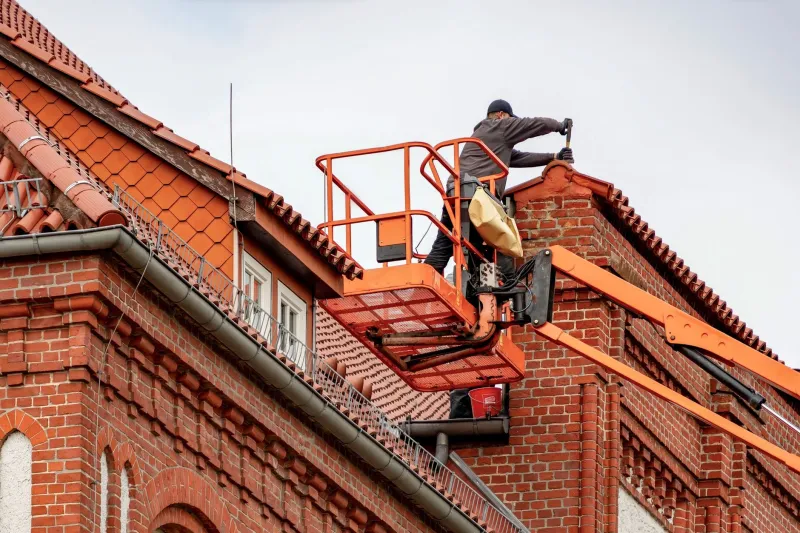
You ring the hire desk with a simple question: how high is it? The answer comes back as a number, you write it down, and the machine arrives. Then the basket stops a metre short of the gutter, or the arm will not reach over the conservatory, or the top fixing on the cladding sits just out of comfortable reach. Nobody lied. The quote just used one height where the job needs three.
At All Levels Access, we would rather you spend five minutes with a tape measure than a day with the wrong machine.
Platform height, working height and reach are not the same thing
On a MEWP spec sheet, platform height is the distance from the ground to the floor of the basket. Working height is usually platform height plus around two metres, an industry convention for a person's reach. It is a useful planning figure, not a promise that you can touch a point two metres above the basket floor with a pole in one hand and a gutter scoop in the other.
Then there is horizontal reach, often shown as an outreach chart rather than a single number. A machine that lifts to 12 metres may only reach a metre or so out at that height. Lower down it may reach further. The headline figure is the easy one to sell. The chart is the one that decides whether you can get to the work.
Measure the task, not the nearest big number
Start from where the machine will stand. Not where you parked the van, not the pavement outside the front door, and not the corner where you happened to unload. Mark the spot, then measure vertically to the point where your hands or tools need to be.
For gutter cleaning, that is usually the gutter line itself, plus the depth of the gutter and the height of any bracket or guard. If you are clearing a valley or a section set back from the fascia, add the horizontal distance. For cladding, measure to the top fixing, not the top panel. For signage, measure to the centre of the sign and the fixing points. For roof-edge work, measure to the edge you need to see over, plus the height of the parapet.
A laser measure is quicker and less optimistic than pacing it out. If the ground slopes, measure from the lowest point under the machine, because that is where the basket height is measured from. A kerb, a drainage channel or a soft verge can change the effective height by a few hundred millimetres, which is often the difference between a comfortable reach and a stretch.
The up-and-over problem
Gutter work is a classic up-and-over job. You do not just need to reach the gutter line. You need the basket above it and out beyond the fascia, so you can look into the gutter and work along it. That means the machine needs enough height at the point of outreach, not just enough height straight up.
Spec sheets often give a maximum outreach at a given height, but the shape of the envelope matters. A machine with a generous headline height may have a tight reach at that height. A smaller machine with a lower platform height may actually put you closer to the work because it can sit nearer the building. Check the outreach chart at the height you need, and allow for the basket rail, the operator's position and any tools.
Also look at what is between the machine and the building. A downpipe, a low wall, a conservatory roof, a hedge or a parked car can push the machine further out. That extra distance has to come out of the reach. If the machine cannot get close, you need a longer reach or a different plan.
Over-hiring is not automatically safer
It is tempting to hire the biggest machine the yard has. Bigger machines are heavier, wider and more expensive. They may not fit through the gate, may not be allowed on the paving, and may need a wider drop zone. They can also take longer to set up and may need a different operator ticket. If the job is a two-storey gutter run above a narrow alley, a large MEWP can turn a straightforward morning into a logistics exercise.
Under-hiring has its own cost. If the basket cannot reach the work, you either bring the machine back, hire a second one, or ask someone to lean out further than they should. The first two cost money. The third costs more than money. The aim is not the biggest number on the quote. It is the right envelope for the job.
A quick check before you confirm the hire
Before you ring back, write down these answers:
- The height from the machine's standing position to the work, not from the pavement.
- The horizontal distance from the machine to the work.
- The height of any obstacle between the machine and the building.
- The outreach available at that height, from the chart.
- The ground conditions, slope and access route.
- The width, height and weight limits on the route in.
Then ask the hire desk to confirm whether the figure they quoted is platform height or working height. If they say working height, subtract the reach allowance before you compare it with your task height. If they say platform height, check the outreach at that height. If the answer is vague, ask for the spec sheet.
The number on the quote is a starting point, not a measurement of your job. The work is done at the point where the tool meets the gutter, the cladding or the sign. That point has a height, a distance out and a clear path to get there. Match all three, and the machine that turns up will be the one you actually needed.