A Card in a Wallet Doesn't Know Your Building
Photo: Ensign Mackenzie Culver / U.S. Navy, Public domain, via Wikimedia Commons
The PAL card is a genuinely good bit of kit. It's portable, it's recognised across the industry, and it does precisely what it says on the tin: it shows that at some point, somebody was assessed on a category of machine and met the standard. What it can't do is walk onto your site on a Tuesday morning and know that the ramp into the loading bay is steeper than the drawings suggest, that the ceiling grid in the atrium sits lower than the architect promised, or that the floor above the plant room isn't really a floor at all.
That's the gap. And in a lot of buildings, it's a gap that quietly gets papered over with four words: he's got a card.
What the card actually certifies
Worth being precise about this, because the confusion usually starts here. An IPAF PAL card confirms that the holder has been trained and assessed against a category — say a 3a mobile elevating work platform or a 3b boom — at a training centre or an approved venue, on a machine that met the scheme's requirements.
It is not a licence. It's not a guarantee of current competence. And it certainly says nothing about whether the person has ever touched this model, with this control layout, on this site.
Under PUWER, the duty on an employer is broader than a certificate: information, instruction, training and supervision, all proportionate to the risk. The manufacturer's manual adds another layer, because almost every MEWP manual contains a line about the operator being familiar with the particular machine before use. The card is one input. Familiarisation is the bit that turns it into something useful.
Three gaps, not one
When people say "familiarisation", they usually mean only the first of these. In practice there are three, and skipping any of them costs you.
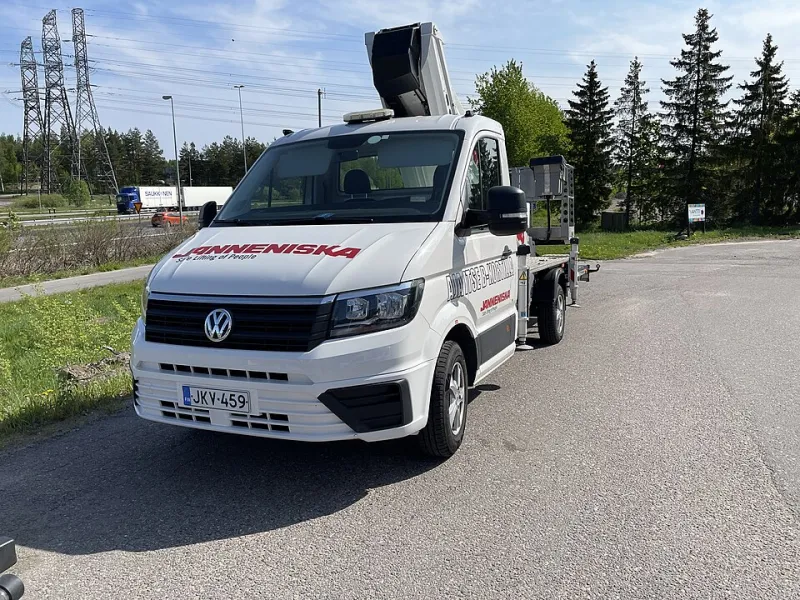
The machine. Where are the controls relative to the last machine they used? Is the platform extension manual or powered? Does the tilt alarm cut out drive, or just warn? Is there a secondary guarding device fitted, and does the operator know what to do when it activates? Two 3b booms from different manufacturers can feel like different trades.
The site. Ground conditions and floor loading, overhead obstructions, the route from the drop-off point to the work face, exclusion zones, the nearest emergency access point, and the bit of the building where the mobile signal dies and nobody can hear the radio.
The task. What is actually being done up there — a light fitting, a duct, a gutter clearance? A basket full of trunking behaves differently from a basket with one person and a drill. Task familiarity shapes the machine choice, the rescue plan and the length of the hire.
What good familiarisation actually looks like
Most of the time, this is twenty to thirty minutes rather than a day. It's a competent person walking the operator through the specific machine at handover: pre-use checks, controls, emergency lowering, the secondary guarding fitted, the rated capacity and how the load chart applies to the configuration in use. Then a walk of the route and the work area, with the site-specific hazards named out loud.
The trap is turning that into a formal training course with a slide deck. It isn't. It's a handover conversation with a record attached.
Recording it without building a filing cabinet
This is where sensible intentions die. Somebody invents a twelve-page familiarisation form, nobody fills it in, and within a fortnight the whole thing is back to "he's got a card".
A lighter approach that survives contact with a real site:
-
One side of A4, maximum. Machine make, model and asset number; operator name and card number; date; the specific hazards covered; signature from both parties.
-
Attach it to the hire paperwork, not to a separate folder. Familiarisation records belong with the RAMS and the handover sheet so they travel with the job.
-
Use the delivery driver or the hire company's demonstrator where they'll do it. Many will run through the controls at delivery. Get that written down rather than assumed.
-
Photograph the signed sheet and drop it in the project folder. Two minutes, and it's retrievable in a year when someone asks.
-
Repeat it when the machine changes, not when the calendar says so. A new model on site is a new familiarisation, even if the operator has twenty years in the seat.
How to challenge the shortcut before the hire lands
If you're the facilities manager or supervisor, the moment to raise this is the day the hire is booked, not the morning it arrives. Three questions do most of the work:
-
Who is operating, and have they used this model before? If the answer is vague, that's your flag.
-
Who is doing the familiarisation, and when? Name a person. "Someone on site" is not a name.
-
Where does it get recorded? If there's no answer, you've just found the gap in your own system rather than the contractor's.
Ask those politely but firmly, and put the answers in the hire email thread. It shifts the conversation from trust to process, which is a much easier place to be standing if anything goes sideways later.
The bit people forget
Insurance and incident investigations don't tend to ask "was the card valid?". They ask what the operator knew about the machine and the site, and what evidence exists that anyone checked. A valid card plus a blank familiarisation record is a thin position to defend.
None of this is a criticism of operators. Most people on a MEWP are careful, experienced and would happily spend twenty minutes learning the quirks of a new machine — it's the schedule that doesn't allow for it. Which is exactly why it needs to be built into the hire plan from the start, alongside the delivery slot and the drop zone.
The card gets you through the gate. Familiarisation is what keeps the day safe once you're inside it.