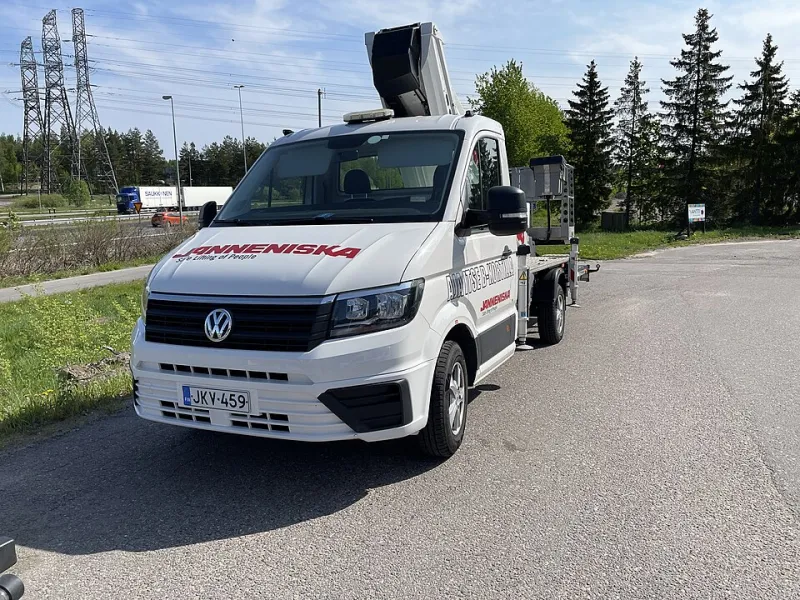
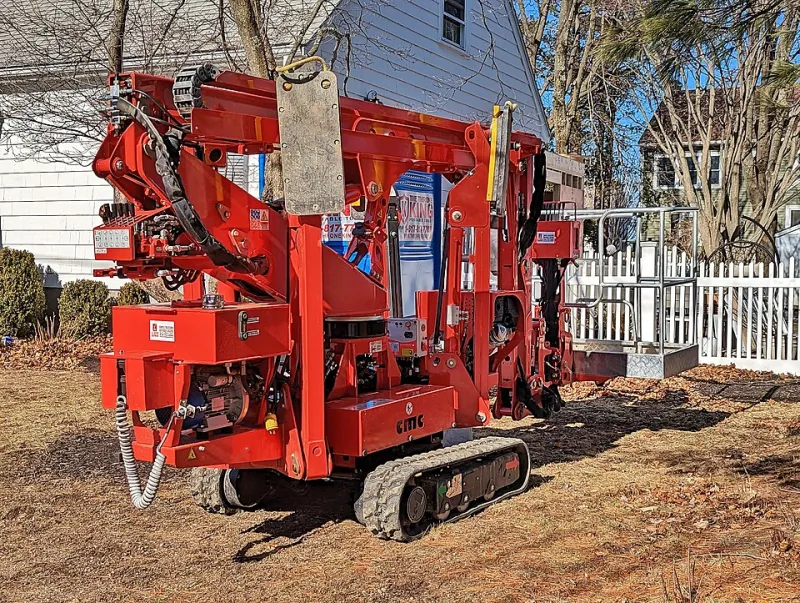
Beyond the Cones: Building a MEWP Drop Zone That Actually Keeps People Out
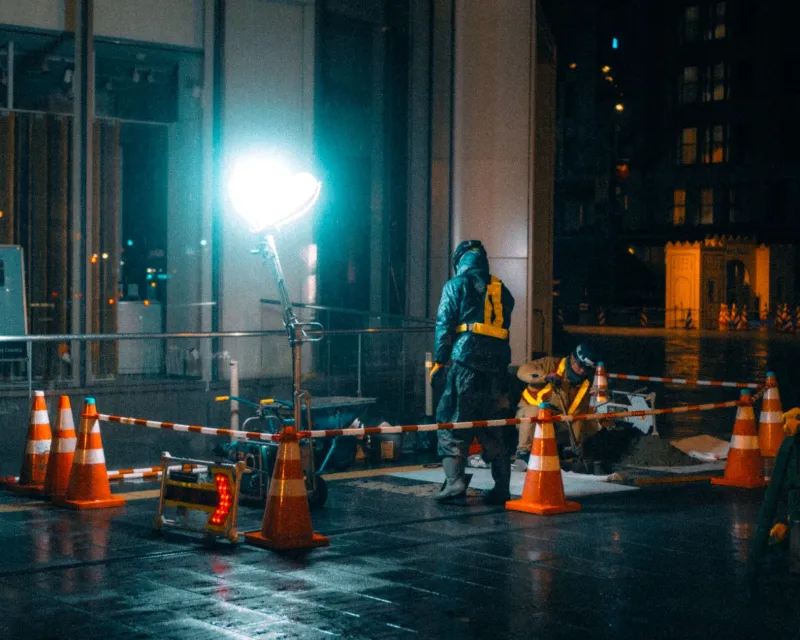
Every MEWP has an exclusion zone in the manufacturer's manual. On a live UK site, that zone often becomes a rumour. A few cones get placed under the basket, a length of tape goes up, someone from another trade ducks under it before the platform has even left the ground, and the whole thing starts to feel optional.
The drop zone is not decoration. It is the area where tools, fixings, offcuts, a phone, a water bottle or a person could fall from height. It is also the area the machine may need to move through, and the space around outriggers or stabilisers on the kit that uses them. If people treat it as a suggestion, the planning has failed long before the first lift.
The zone usually fails before the machine arrives
A lot of exclusion zones are set by the person delivering the machine, not by the person who will run the job. That is the first weakness. The hire driver has a lorry to unload and another drop to get to. They put the cones out in a neat rectangle, hand over the keys, and leave. By the time the operator has read the manual and worked out where the platform actually needs to travel, the barriers are in the wrong place.
Other common failures are just as ordinary. The tape is too low, so people step over it. The cones are too light, so a dumper nudges them aside. The pedestrian route runs straight through the zone because nobody planned an alternative. The barrier is set for the platform's starting position, not for the full travel path. And nobody has been given the job of keeping the zone alive through the day.
Plan the walkway first, then the barrier
If the main pedestrian route goes through the drop zone, people will cross it. Not because they are reckless, but because it is the way to the welfare cabin, the materials compound or the next floor. You can put up all the tape in the world and they will still take the shortest route.
So start with the route, not the cones. Can you create a signed alternative that is genuinely quicker or at least not much longer? Can you use a gate, a controlled crossing point or a temporary walkway? Is there a way to separate vehicles from pedestrians as well as people from the MEWP? On a tight site, this may mean a short diversion and a bit of grumbling, but it is far better than relying on goodwill.
Barriers should be physical enough to stop a person who is not paying attention. Cones and tape are useful for marking a boundary, but they are not much of a barrier. Expandable barriers, Heras panels, water-filled blocks or solid fencing all give people a clearer message. The zone should also account for the machine's movement, not just the basket's current position. If the MEWP travels, the barrier needs to travel with it or the zone needs to be big enough to cover the route.
Put the barrier where people actually walk
A common mistake is to measure the drop zone from the centre of the machine and ignore the real world. The platform may slew, the operator may need to reach over a rack, and the machine may need to reposition. Tools can bounce. Fixings can roll. A dropped tape measure from height does not need to be heavy to cause a nasty injury.
Use the manufacturer's clearance figures and the risk assessment, then look at the site with those figures in mind. Is there an overhead cable? A fragile roof? A public footpath on the other side of the fence? Are delivery drivers reversing near the zone? Is there a crane lift planned later that will change the access route? The exclusion zone should be set for the worst realistic combination, not the tidiest one.
The spotter is not there to wave
A spotter, banksman or whatever your site calls them is not a decorative role. They are there to control the zone, not just watch the machine. That means they need the authority to stop the lift, stop pedestrians and stop the job if the plan changes. If they have to leave for a delivery or a break, the work should stop or another competent person should take over.
Give them a clear brief. Which gate are people using? Which crossing point is open? Who has been told not to enter? What do they do if a delivery driver ignores the barrier? A radio and a high-vis vest are useful, but a named person with a clear instruction is better. Rotating the spotter every twenty minutes without a handover is not a plan.
Toolbox-talk wording that lands
'Please keep clear of the barriers' is too weak. It sounds like a request and it does not tell anyone what is actually happening. Try something more direct: 'This barrier is the edge of the drop zone. If you cross it, the operator will stop work. Use the crossing point by the gate.'
Explain why in plain language. Say what could fall, how far it could travel and how long the work will take. Name the person to speak to if someone needs access. Ask people to repeat the instruction back, especially if there are agency staff, delivery drivers or visitors on site. A short daily brief is better than a long induction that nobody remembers.
The 'just for a minute' problem
This is the moment that tests every exclusion zone. Another trade wants to walk underneath because their tools are on the other side, or because the shortcut saves two minutes. They are not usually trying to cause trouble. They are trying to get their job done.
The answer needs to be calm and consistent. 'No, the operator will stop and we will lose time. Use the crossing by the gate.' If they push, offer an alternative: an escort, a wait, a different route. Do not get drawn into a debate about whether the machine is actually working at that moment. The zone is not based on whether something is falling right now; it is based on the risk of the task.
Operators should never feel rude for stopping. If the site culture punishes them for delaying another trade, the zone will fail. Supervisors and site managers need to back the stop. That is the bit that turns a barrier from a suggestion into a rule.
Keep the zone live
An exclusion zone is not a one-off set-up. It changes when the machine moves, when the task changes, when the weather turns and when the shift hands over. Check it at the start of the day, after breaks, after deliveries and whenever the MEWP is repositioned. Take a photo if it helps the handover, but do not confuse a photo with a control.
If the barrier is damaged, replace it. If the route changes, re-brief the people using it. If someone keeps crossing the line, find out why. Sometimes the zone is too big and a better route is needed. Sometimes the brief was not clear. Sometimes someone just needs a direct conversation. But leaving it because 'everyone knows' is how the drop zone becomes a rumour again.