One Machine, Six Trades: A Shared MEWP Protocol Worth Arguing About Once
Photo: multiple contractors working around shared scissor lift construction site UK, via images.twinkl.co.uk
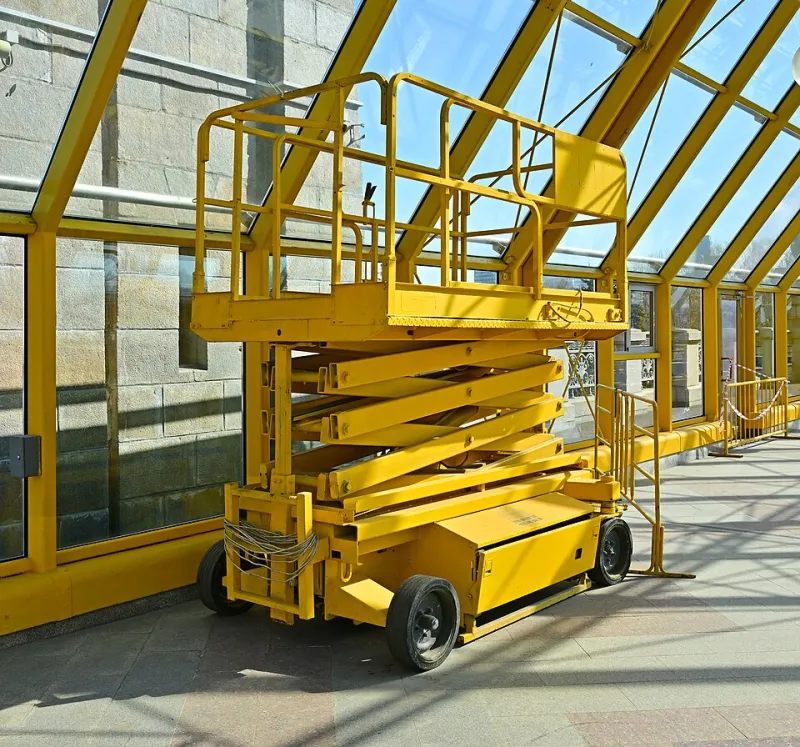
Every multi-trade site I've walked has the same conversation waiting to happen. One scissor lift, four or five contractors, a hire period that everyone treats as somebody else's responsibility. It works fine for a fortnight. Then there's a near miss, and suddenly five firms are extremely keen to explain what happened, and none of them were the last person in the basket.
This is not a technical problem. It's an ownership problem, and it gets solved on paper, before the machine lands.
The machine loses its memory around trade three
On day one, one firm signs for the lift, does the walkround, checks the manual, knows where the charger is. By day three, the MEWP has been used by the electricians, the sprinkler fitters and a bloke from the cladding contractor whose name nobody caught. The pre-use check book has one entry, from Monday.
That gap matters because when something goes wrong, the investigation doesn't ask who owns the machine. It asks what condition it was in at the time, who last used it, and whether faults were reported. If the answer to all three is 'unclear', the site has a problem it can't fix retrospectively.
Sign-in sheets that nobody reads are theatre
A clipboard by the machine with four columns is better than nothing. Barely. What actually works is a log with teeth:
- Name, company, card number and time in and out for every use, every shift — not every day.
- A tick box confirming the pre-use check was done, signed by the person who did it.
- A comments column that is actually read by someone with authority each morning.
- A named custodian for the log, rotated weekly, so it doesn't die of neglect.
If your mobile plant isn't controlled in the same way, use the same system. The point isn't the paperwork; the point is being able to answer the question at four o'clock on a Friday afternoon.
The pre-use check belongs to a person, not a trade
'We all check it' means nobody checks it. The check needs to be done at the start of each shift by the operator who is about to use it, signed, and not delegated to whoever happens to be nearest. That's the standard the manufacturer's manual assumes and the standard any investigating inspector will assume too.
A workable habit: the first operator of the shift does the full walkround while the second watches and countersigns. It takes six minutes, it catches the obvious things — damaged guardrails, weeping hydraulics, a frayed charger lead, a missing key — and it makes two people responsible instead of none.
Fault reporting needs a route, not a shrug
When the platform won't lift above half height, the instinct is to work around it. Half height is fine. Half height is probably fine. That's how a fault becomes an incident.
A good protocol says three things clearly:
- Any operator can withdraw the machine from service, immediately, with no permission needed.
- The withdrawal is recorded on a tag or lockout notice attached to the machine, plus a line in the log and a photo in the site group chat.
- The hire firm is called the same day, by a named person, and the machine is not returned to service until the fault is cleared and documented.
That third point is where sites fall down. Someone tags the machine, everyone assumes someone else rang the hire desk, and three days later it's back in use because the tag fell off.
Name the person who can stop the job
This is the bit people avoid, and it's the most important line in the protocol. 'Supervision' is a word. A name is a mechanism.
Write down who has authority to stop the use of the shared machine: the principal contractor's site manager, the appointed person for the lift, and any operator on the ground who spots something unsafe. That last one is not a loophole — anyone operating plant should be able to refuse to use it. Say it out loud at induction, so that when it happens, nobody is surprised.
Keys are a control, so treat them like one
A key left in the ignition is a machine available to anyone, trained or not. A single key custodian with a sign-out board is a small administrative burden that removes an entire category of argument. It also gives you a clean answer to 'who had it last?' — which is the only question that matters after a knock.
Agree the money before the near miss
When a shared machine gets damaged, the hire firm bills the hirer. Then the hirer goes looking for whoever was in the basket. That conversation goes far more smoothly if it was had in advance.
Put it in the protocol: repair costs and the insurance excess are allocated according to the log, damage is photographed as found and reported the same shift, and the hire firm is notified within 24 hours regardless of who is at fault. Nobody enjoys this clause. Everybody needs it.
One page, signed, reviewed
The whole thing fits on a single sheet: who signs for the machine, who checks it and when, how faults are reported, who can stop it, where the key lives, how damage is recorded and who pays. Add it to the site induction, get each contractor's supervisor to sign it, and put a review date on it.
It takes an hour to write and it is genuinely dull. It is also the difference between a near miss that produces a better procedure and a near miss that produces six firms pointing at each other while the hire company's invoice sits unopened on someone's desk.