The Socket You Forgot to Book: Power Planning for Indoor Electric MEWP Hires
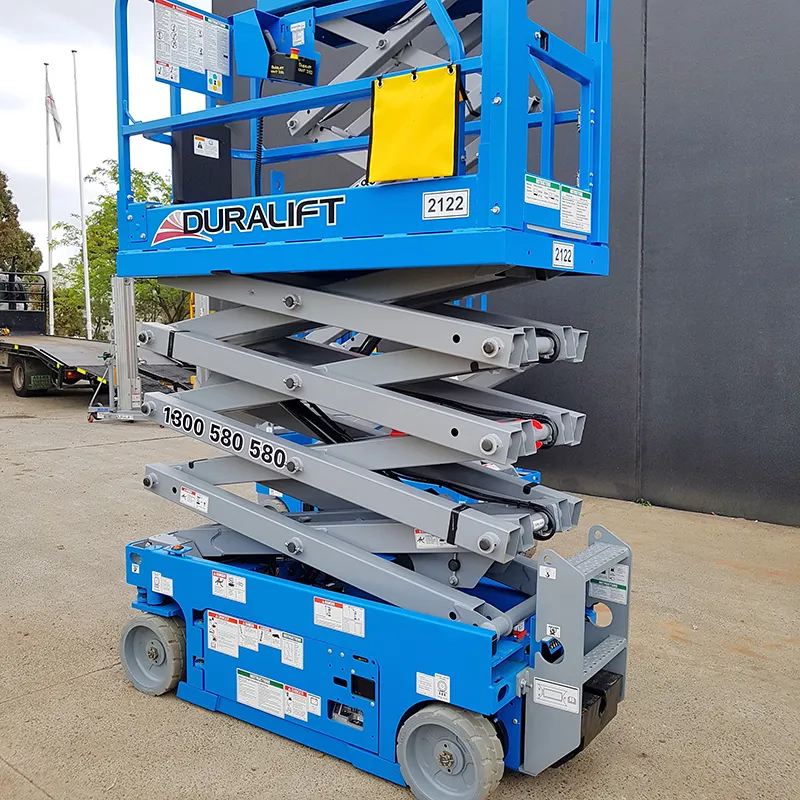
Photo: ERab123, CC BY-SA 4.0, via Wikimedia Commons
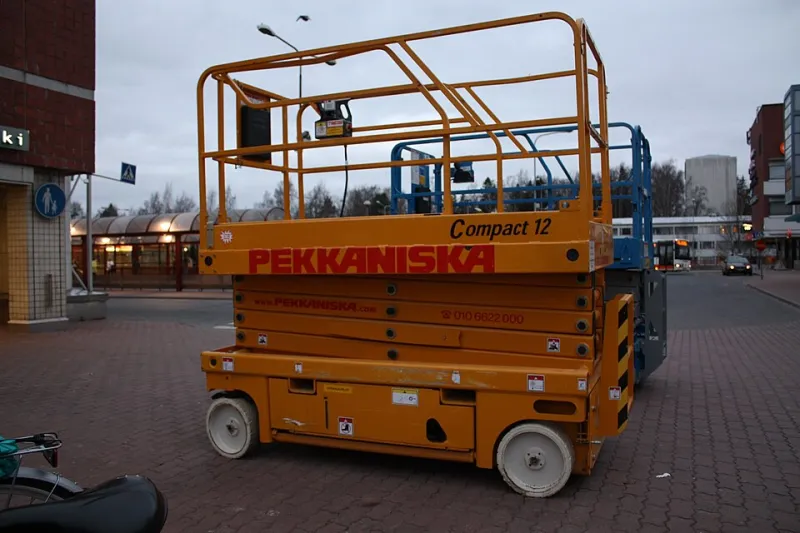
There's a particular kind of silence on an indoor job when the electric scissor lift stops mid-task and the display throws up a battery warning. It's not dramatic. The machine just sits there, parked under the atrium roof, while everyone renegotiates the day.
Electric MEWPs have become the default choice for indoor work, and rightly so: no fumes, far less noise, and you can run them in a live retail unit or a hospital corridor without a queue of complaints. But the machine is only as good as the power plan behind it, and that plan is usually the last thing anyone thinks about — after the machine spec, the delivery slot and the access route.
It shouldn't be. Charging is an access decision.
Work out the duty cycle before you pick the machine
Start with the honest version of the day. How many hours will the machine actually be moving, lifting and driving? A fit-out with long runs between work faces drains a battery very differently from a job where the platform is parked under one ceiling grid for six hours.
Most hire desks will give you a realistic working duration per charge if you ask directly, and manufacturer datasheets list it — usually as a range, because it depends on load, terrain and how much of the day is spent driving versus elevating. Ask for the figure rather than assuming the machine will last a full shift. Quite often it won't, especially on older lead-acid models.
If the answer is "about five hours" and your shift is nine, you've got a choice to make at the quoting stage: hire a larger machine with more battery, hire two machines and rotate, or plan a mid-shift charge with a proper power supply. Any of those is fine. Discovering it at 2pm is not.
Match the charger to what's actually on the wall
Electric MEWPs don't all charge the same way. Smaller indoor models often run on 240V with an onboard charger and a standard plug; larger ones may want a 16A commando socket, and some sites run 110V. Before the machine turns up, someone needs to physically look at the socket you intend to use and confirm three things: the voltage and current rating, that it's protected properly, and that it's actually live.
A few practical points that catch people out:
-
Distance matters. Long extension leads on a high-draw charger cause voltage drop, and the charger may refuse to start or keep tripping. Site power isn't magic — it behaves.
-
Don't share a circuit with the kettle, the site radio and the welfare cabin heater. Charging on a loaded circuit is a reliable way to spend a morning resetting breakers.
-
Protection is not optional. Outdoor sockets, damp plant rooms and temporary distribution all need the right protection, and the charger should be appropriate for the environment. If you're unsure, the question goes to whoever signs off your temporary electrics — not to whoever's nearest the machine.
-
Generators need sizing, not guessing. If site power isn't available, a small portable generator won't necessarily run a MEWP charger. Check the charger's draw against the generator's continuous rating before you commit.
Cable routes are trip routes
Here's the one that gets missed most often on busy indoor sites. The charging cable becomes a permanent feature of the floor for six or seven hours, usually in a place chosen for proximity to the socket rather than safety.
Plan the charge point like you'd plan the machine's parking spot. Put it out of the main walkway, protect the cable with a proper ramp or cover where it must cross a route, and mark it on the same drawing you used for the drop zone. If the only socket is beside the main pedestrian entrance, that's a fact worth knowing before the hire is confirmed — because the answer might be "hire a machine with a longer runtime" instead.
Ventilation: what's real and what's folklore
There's a lot of half-remembered advice about battery charging and ventilation, and it ranges from sensible to nonsense.
Lead-acid batteries do release hydrogen during charging, particularly near the end of the cycle, and they need ventilation as a result — the manufacturer's instructions will state what's required. In a plant room with no airflow and the door shut, that's a real consideration. In a large open atrium, it's usually not.
Lithium-ion machines don't carry the same gassing issue, but they do have their own requirements around temperature and charging location, and those are set out by the manufacturer rather than by site tradition. The rule is simple: read what the hire company and the manual say for that specific machine, and don't apply a rule of thumb borrowed from a different battery chemistry.
Who pays while it's parked on charge?
This is the commercial question that turns into an argument on day three. Hire charges run on calendar time, not on hours worked. If the machine is on charge for six hours, you're paying for six hours of use you didn't get.
Three ways to keep it fair:
-
Build charging into the hire period from the outset. If you know the machine needs a long charge, either extend the hire or accept fewer productive hours in the quote — rather than discovering the shortfall later.
-
Charge overnight where the site allows it. This is the single biggest win on most indoor jobs. A machine that goes on charge at 5pm and comes off at 7am costs you nothing in productive time. It does require secure access and someone willing to plug it in.
-
Agree who supplies the power and who monitors the charge in writing. Vague arrangements are how a contractor ends up paying for electricity they didn't use, or an operator ends up babysitting a charger they weren't told about.
A short pre-hire checklist
Before the machine is confirmed, get answers to these:
- Realistic runtime per charge, on this task?
- Where exactly is the charger going, and what's the socket spec?
- Who's checking the socket is live and protected?
- Can it charge overnight, and who has keys?
- Where does the cable run, and how is it protected?
- What does the manual say about charging location and ventilation for this model?
Six questions, asked a week early, save an entire day of standing around looking at a stationary platform. Electric MEWPs are the right answer for most indoor work — you just have to plan the plug with the same care as the platform.