The Borrowed Basket: Why a Telehandler Isn't Your Access Plan
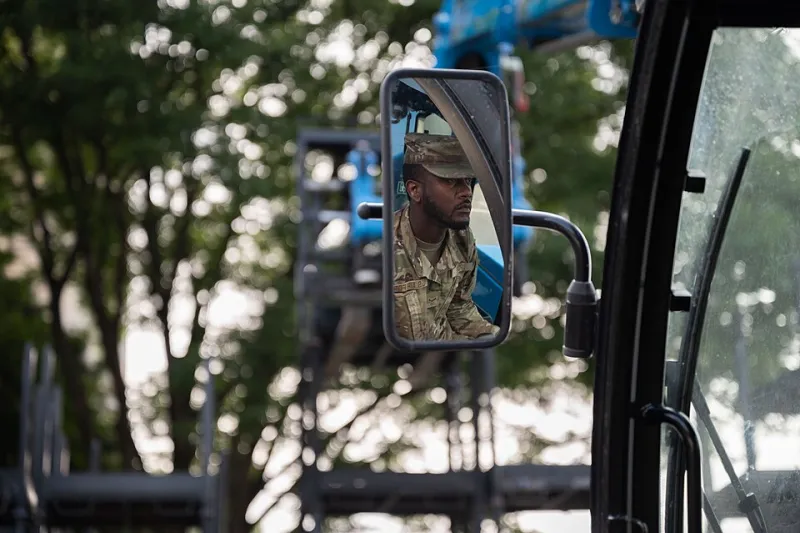
Photo: U.S. Air Force 102IW by Senior Airman Julia Ahaesy, Public domain, via Wikimedia Commons
Someone on site has a bright idea. The telehandler is already there, the job is only a few metres up, and there's a man basket in the store. The sentence lands before anyone has checked a hire agreement: 'We'll just use the telehandler.' It sounds practical, it sounds temporary, and it is one of the most common access shortcuts on UK sites. It is also the point where a materials-handling machine starts being treated as a MEWP without anyone deciding that out loud.
At All Levels Access, we're not anti-telehandler. They're brilliant at moving pallets, trusses and bundles of pipe. The problem starts when a non-integrated basket is dropped onto the forks and the job is reclassified in everyone's head as 'access'. That's a different activity with different paperwork, different training and a different set of people who care about it.
Why the shortcut feels reasonable
On a busy site, the telehandler is often the only machine that can get near the job. It has reach, it has a familiar operator, and it is already on the hire sheet. A basket in the store looks like the missing piece. The logic runs: we're not building a scaffold for a ten-minute job, we're not ringing the hire desk for another machine, and the person going up is 'only having a quick look'.
That last phrase is the giveaway. Short duration does not equal low risk. A fall from three metres is still a fall from three metres. A basket that is not part of the machine's designed access system is still a basket that was never intended to carry a person on that machine.
What the hire paperwork actually says
Hire agreements are not written to be awkward. They describe what the machine is for, what it must not be used for, and who is allowed to operate it. A telehandler hired as a materials handler is generally hired on that basis. If you put a non-integrated basket on the forks and send someone up, you are changing the use of the machine. The hire company may see that as outside the agreement, and that matters when something goes wrong.
There is also the matter of thorough examination and inspection. A MEWP has its own inspection regime. A telehandler has its own. They are not interchangeable just because the machine can lift something heavy. If the paperwork says one thing and the site is doing another, the gap is where disputes live.
The insurance bit nobody wants to hear
Insurance is not a magic wall that protects everyone no matter what happened. Hired-in plant cover and public liability policies can have conditions attached: the equipment must be used as intended, the operator must be competent, and the work at height must be planned. A borrowed basket on a forklift or telehandler can put you in a grey area fast. The insurer may ask who approved the arrangement, what the manufacturer said, and what training the operator had. 'It was only a quick job' is not a answer that tends to age well.
None of this is about blaming the person in the basket. It is about the fact that the person in the basket is the one who pays first if the arrangement is wrong.
The safety expectations in plain English
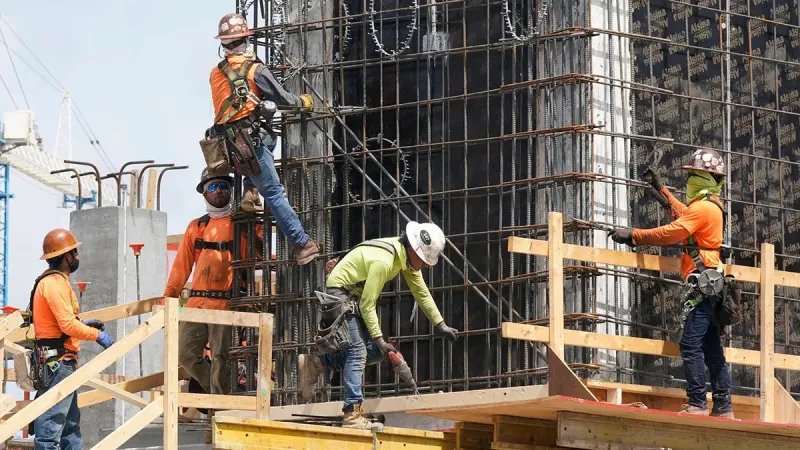
UK work-at-height law is not a mystery. The Work at Height Regulations 2005 set out the hierarchy: avoid work at height where you can, prevent falls where you can't avoid it, and reduce the distance and consequences of a fall where you can't prevent it. PUWER and LOLER add the equipment and lifting side. HSE guidance is clear that forklift trucks are not designed to lift people unless a suitable integrated platform is fitted and the operation is properly controlled.
That word 'integrated' is doing a lot of work. A platform designed by the machine manufacturer to work with that specific machine, fitted as intended, with the right controls and interlocks, is a different proposition from a generic basket dropped onto forks. Some telehandler work platforms exist and are used legitimately. The key is that the machine, the platform, the operator and the paperwork all agree. If any one of those is missing, you don't have an access plan. You have a gamble with a nice paint finish.
A script for the yard or the site meeting
You don't need to turn into the safety police to push back. You need a few calm sentences that move the conversation from 'quick favour' to 'proper choice'.
Try this: 'That basket isn't a MEWP, and the hire paperwork won't treat it as one. If we need someone up there, let's book the right kit.'
If someone pushes, ask for the evidence: 'Can you show me the manufacturer's approval for that platform on this machine, plus the operator's training record and the rescue plan? If not, we need to stop and re-plan.'
Then offer a route that keeps the job moving: 'The telehandler can stay on materials. We'll bring in a scissor lift for the overhead work. Both jobs get done, and nobody has to explain a workaround later.'
And if you're the one being pressured: 'I'm not refusing to get it done. I'm refusing to make a hire agreement and an insurance claim the thing that gets tested.' That usually lands better than a lecture.
Safer routes for short jobs at height
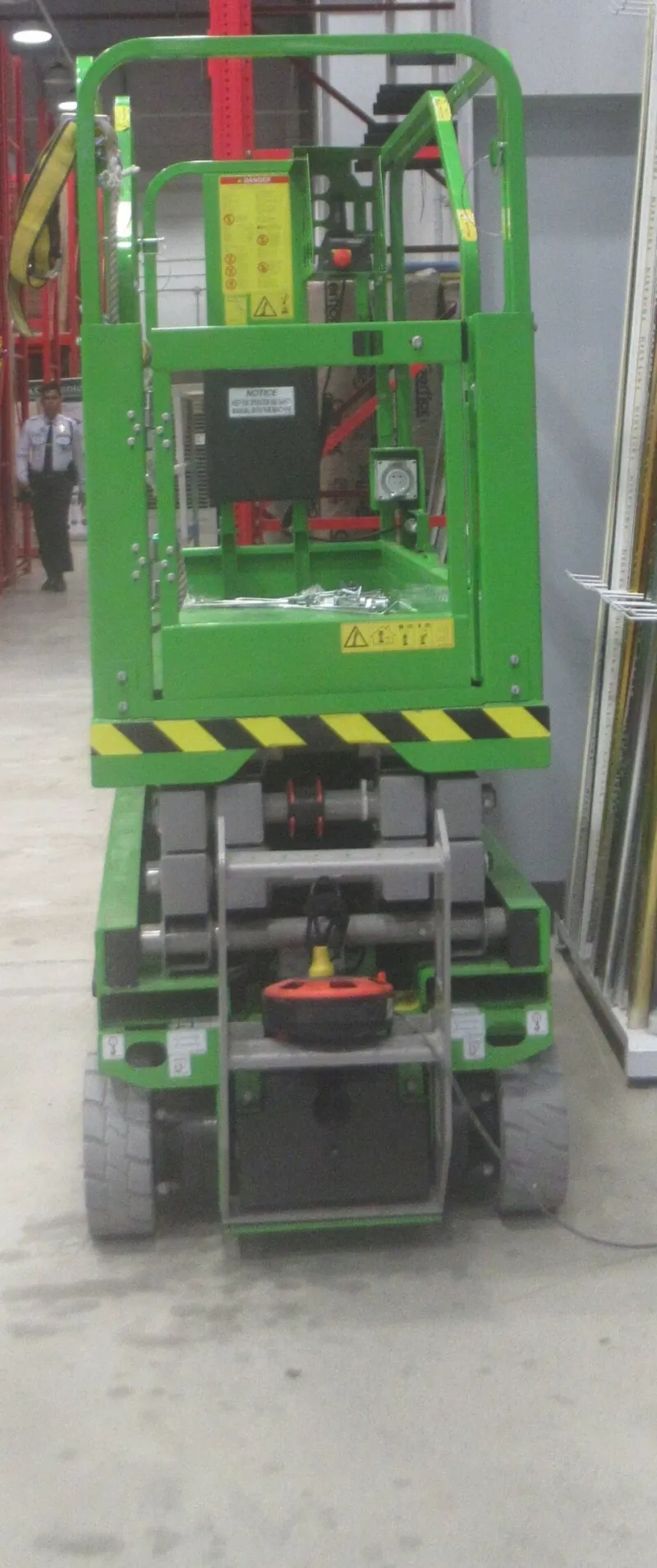
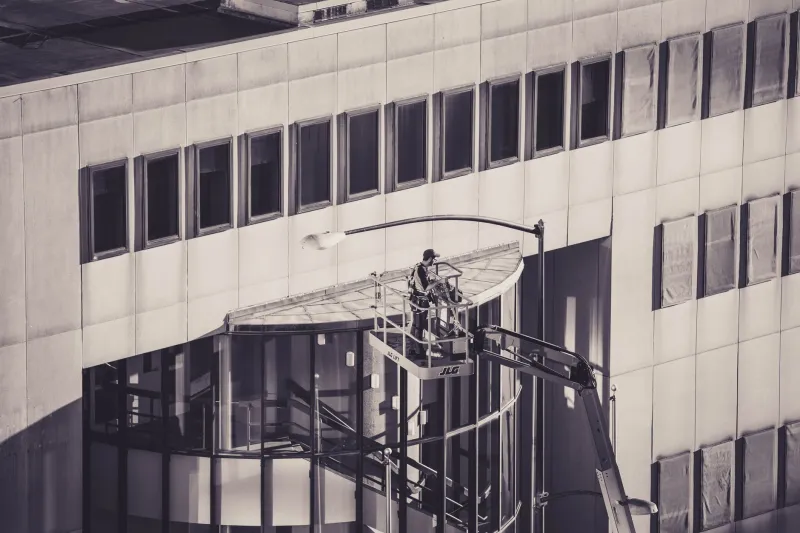
Short-duration work still deserves the right equipment. For low-level tasks, podium steps or a micro scissor lift can be quicker than people expect. For indoor work on level floors, a scissor lift is often the simplest answer. For reach over obstacles, a boom lift may be the practical choice. Mobile towers can work well for some tasks, provided they are built by trained people and used on suitable ground. Scaffolding still makes sense for longer or repetitive work.
If a telehandler work platform is genuinely part of the plan, make sure it is the manufacturer-approved platform for that machine, the operator is trained for that combination, the ground and load limits are checked, and the emergency lowering and rescue arrangements are understood. That is not a shortcut. That is a properly planned operation.
Before the machine turns up
Ask three questions early: what is the job, what is the safest way to reach it, and who is responsible for the equipment choice? If the answer to the second question is 'the telehandler because it's already here', stop and check the first and third. A hire desk can usually find you a scissor lift or a boom lift faster than a site can untangle an incident report.
The borrowed basket will always look tempting. Your job is to make the proper option just as easy to say yes to. That's not slowing the job down. That's keeping it moving without handing someone a problem they didn't order.