Lowering the Basket Isn't a Paragraph: How to Build a MEWP Rescue Plan That Works Under Pressure
The paragraph that never gets read
Open almost any RAMS for a MEWP job and somewhere near the back there is a sentence. It says something like: 'In the event of an emergency, the operator will be lowered using the emergency descent system, and the emergency services will be called.' Box ticked. Document signed. Nobody has tested a single word of it.
That is not a rescue plan. It is a hope with a reference number. And the reason it persists is that MEWP incidents where descent is genuinely needed are rare enough that nobody on site has ever seen the plan used for real — so nobody notices it is hollow until the day it matters.
What 'rescue' actually means on a MEWP
Strip it back. There are really three scenarios, and they need different answers:
- The machine is fine, the operator isn't. A medical episode, a faint, a bang to the head. The platform needs to come down promptly and someone needs to be waiting with first aid.
- The machine has failed. Loss of power, a hydraulic fault, a control failure, a machine that has sunk or become unstable. Now you need a mechanical means of lowering the platform without the machine's normal drive function.
- The operator is out of the platform. A fall arrested by a harness, or a casualty suspended in a lanyard. This is the one that kills people quickly, and it is the one most plans address least.
Most RAMS paragraphs cover scenario two in half a line and ignore the other two entirely.
Name the roles, or it will not happen
A rescue plan without named people is a suggestion. On every job you want at least:
- A designated rescuer on the ground, briefed and present whenever the platform is occupied. Not 'someone in the cabin'. Not 'the lad on the mixer who'll hear you shout'.
- A person who can operate the ground controls and knows where the auxiliary lowering function lives on that specific machine.
- A caller who knows the site address, the postcode, the access gate and who is meeting the ambulance.
- A decision-maker who can stop the job, close the area underneath and make the call.
On a one-person job, these roles collapse into one person and the plan quietly stops working. Be honest about that when you plan it.
Equipment: know what is on the machine
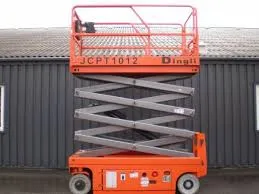
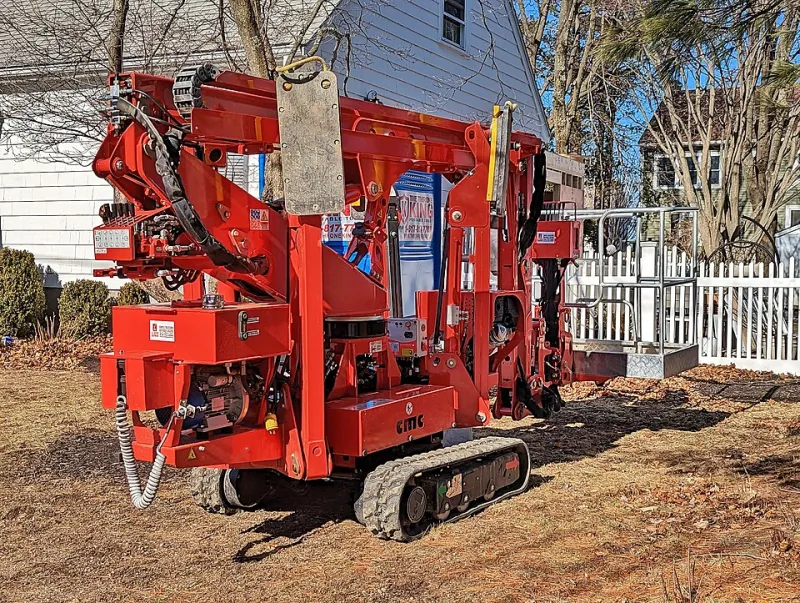
Every MEWP has some form of emergency lowering, whether it is a secondary power pack, a manual pump, a dedicated descent valve or a gravity lowering function. The point is that it is not identical between models, and the person who needs it under pressure will not be reading a manual.
So: find it during familiarisation. Use it. Ideally once with an empty basket while the machine is low, so you know what it feels like, how slow it is, and how much effort the pump handle takes. Ask the hire company to demonstrate it on the machine you are actually taking, not a similar one.
Beyond that, think about harnesses and lanyards: who checks them, what type is right for the machine, and whether anyone on site has been trained in recovery of a suspended casualty. If the answer to the last one is no, that is a gap worth writing down.
Communication is half the plan
A rescue plan that relies on the operator's mobile is a rescue plan that fails in a basement service yard, a steel-frame building or a listed stone frontage with a metre of wall between you and a signal.
Sort out radios, sort out a whistle or a horn signal, sort out a pre-agreed phrase that means 'stop everything and come here'. Two-way communication between the platform and the ground is not a nice touch — it is the difference between a controlled lowering and someone waving at a window.
Where the hire company stops
Hire companies are genuinely useful here: machine familiarisation, the emergency descent demonstration, the right harness, and clarity about what the machine can and cannot do. What they are not is your rescue team. The duty sits with the site, the employer and the person in control of the work — not the firm that dropped the machine off on Tuesday.
Be clear about this with the hire desk when you book. A good supplier will talk you through the emergency lowering on that model and can often supply harnesses and ground rescue kit. That support is real and worth asking for; it just is not a substitute for your own plan.
What the emergency services can and cannot do
Fire and rescue services do have MEWP and height rescue capability in many areas, but it varies by brigade, by station and by time of day. Nobody should be building a plan around a 15-minute response for a casualty suspended in a lanyard, where the medical clock is running much faster than that. The ambulance service needs to know where you are and how to get in — which on a tight urban site is often the harder problem.
Call them, absolutely. But treat them as the second line, not the plan.
A test that tells you the truth
Run this on your next job, before the first lift:
- Can the named rescuer point to the emergency lowering control without looking it up?
- Can they lower the platform with the machine switched off and no keys in it?
- Is the ground beneath the platform closed off, or is it still a walkway?
- Does the radio work from inside the building to the platform position?
- Does the site address you would give a 999 call match the gate the ambulance will actually find?
- Has anyone on site practised casualty recovery, or is that assumed to be someone else's job?
- Who makes the call to stop the job — and would they actually make it?
If two or more of those get a shrug, the rescue plan is a paragraph. Rewrite it, then walk it through with the team on site, out loud, with the machine in front of you. Ten minutes now versus the worst twenty minutes of your career later is not a difficult trade.